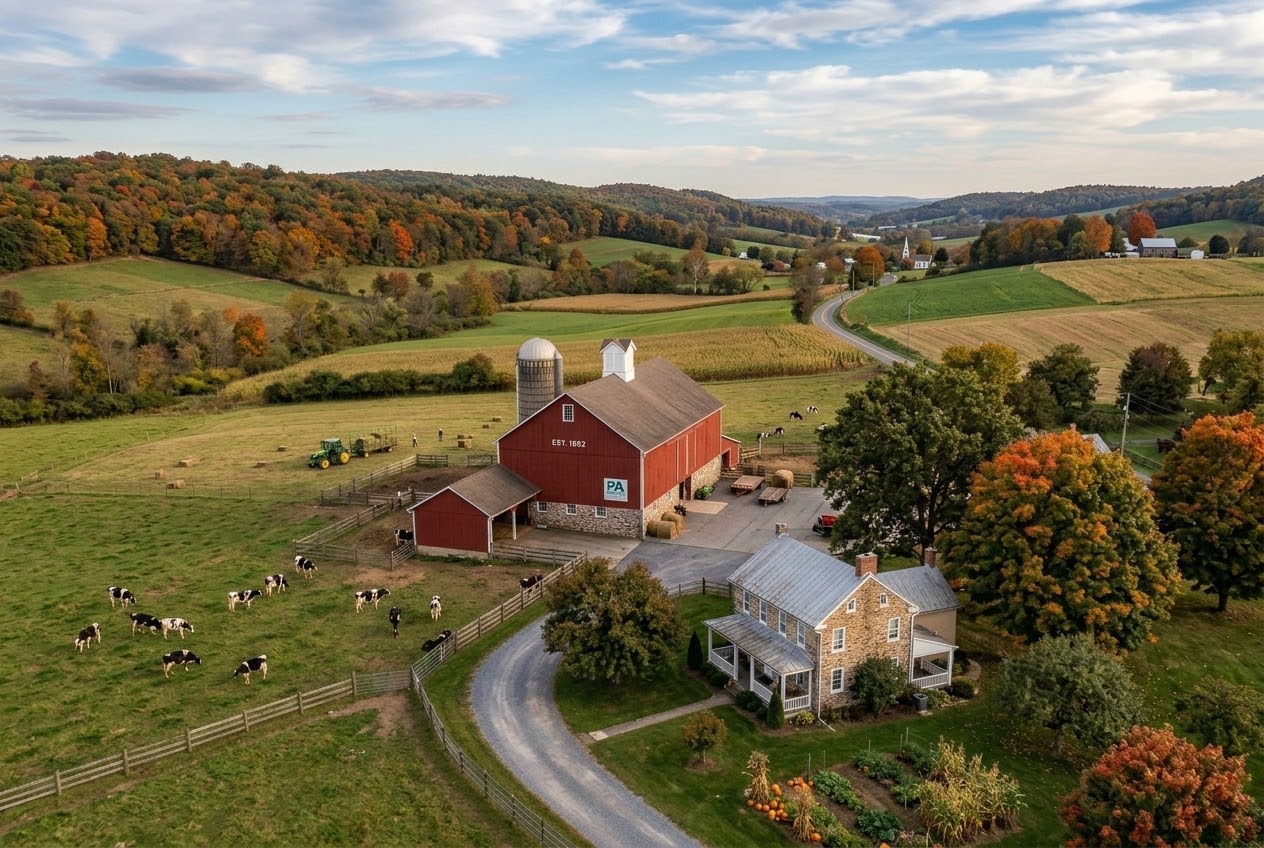
When most people think of a property appraisal, they picture a residential home — a neighborhood street, comparable sales a few blocks away, a straightforward valuation process. But when the property in question is a farm, a parcel of raw land, or an agricultural operation, the process looks fundamentally different.
Land and farm appraisals require a specialized set of skills, knowledge, and tools that go well beyond what a standard residential appraisal covers. If you own, are purchasing, or are settling an estate that involves this type of property in Pennsylvania, understanding those differences matters.
These Properties Don’t Fit a Standard Mold
A residential appraisal leans heavily on comparable sales — similar homes in similar neighborhoods that sold recently. Land and farm properties don’t work that way. Each parcel tends to be more unique and the pool of recent comparable sales in a given area is often much smaller. Two neighboring farms can differ dramatically in value based on soil quality, drainage, access to water, road frontage, or how the land has been used and maintained over time. Treating a farm or land parcel like a house leads to an inaccurate valuation, which can create real problems whether you’re selling, borrowing against the property, or dividing an estate.
Factors Affecting the Value of Land and Farm Property
Valuing agricultural and rural land requires looking at a broad range of factors that simply don’t come up in residential work. A qualified appraiser considers things like:
- Total acreage and how the land is configured
- The amount of tillable or productive agricultural land
- Current and historical land use
- Zoning and whether the property is enrolled in Act 319 (Clean and Green) or other Pennsylvania agricultural preservation programs
- Access from public road frontage, easements, or landlocked parcels
- Outbuildings, such as silos, grain bins, equipment storage, or livestock facilities
- Site improvements including fencing, irrigation systems, or drainage infrastructure
- Timber value, if applicable
- Mineral rights, if they convey with the property
Each of these elements must be weighed carefully and supported with appropriate market data.
Finding Comparable Sales Is More Complex
In a suburban neighborhood, an appraiser might find five or six closely matching sales within a mile. Rural and agricultural properties are different. Comparable sales may come from a much wider geographic area, and adjustments need to be made for differences in acreage, productivity, improvements, and use. The appraiser must understand not just what sold, but why. For example, did a buyer pay a premium for hunting ground, development potential, or an operational farming setup. Finding and analyzing those sales accurately takes experience with the rural Pennsylvania market specifically.
Intended Use Shapes the Analysis
The purpose behind an appraisal can also shape how the property is analyzed. A working farm being sold to another farmer may be valued differently than the same property being purchased for residential development or recreational use. An appraiser needs to consider the highest and best use of the land. Not just what it is today, but what it’s reasonably suited for given zoning, location, and market demand. In Pennsylvania, this analysis can be particularly nuanced given the prevalence of agricultural preservation easements and farmland protection programs in counties like Berks, Chester, and Montgomery.
When You May Need a Land or Farm Appraisal
Owners, buyers, heirs, attorneys, and lenders all find themselves needing this type of appraisal in a variety of situations, including:
- Sale of a farm or rural parcel
- Estate settlement when agricultural land is part of the estate
- Divorce proceedings where farmland or undeveloped property is involved
- Financing or refinancing with agricultural land as collateral
- Gifting property and establishing fair market value for tax purposes
- Eminent domain or condemnation proceedings
- Pennsylvania farmland preservation applications
- Disputes involving property boundaries or value
Not every appraiser has hands-on experience with agricultural and rural property. The terminology, the data sources, the regulatory landscape — it’s a different world. An appraiser who works regularly with farms and land understands how to read a soil map, how Act 319 enrollment affects value, how to evaluate an older bank barn versus a modern steel equipment building, and where to find reliable comparable sales data in thinly-traded rural markets. That experience directly affects the credibility and accuracy of the final report.
What to Have Ready Before the Appraisal
Gathering the right information ahead of time helps the process go more smoothly and supports a more accurate appraisal. Helpful documents and details include:
- Deed and legal description of the property
- Survey or plot plan, if available
- Tax parcel information and current assessed value
- Details on any Act 319, Act 515, or agricultural preservation easements
- Records of outbuildings, improvements, or recent capital investments
- Information on current use, such as crops grown, livestock, and lease agreements with tenant farmers
- Any recent sale offers, purchase agreements, or listing history
- Well and septic information, if applicable
Get the Right Appraisal for the Right Property
When it comes to land and farm properties, a general appraisal isn’t enough. The stakes are often significant and an inaccurate valuation can create costly problems down the road. Working with an appraiser who has specific experience in agricultural and rural property in Pennsylvania means you’re getting a report grounded in real knowledge of the local market, the regulatory environment, and the unique factors that drive value for these properties.
Tri-County Appraisal Service, located in Boyertown, serves Berks County, Montgomery County, Chester County, and the surrounding region with experienced, professional appraisal services for land, farm, and rural property. If you have a property that doesn’t fit the typical residential mold, reach out to discuss how we can help.